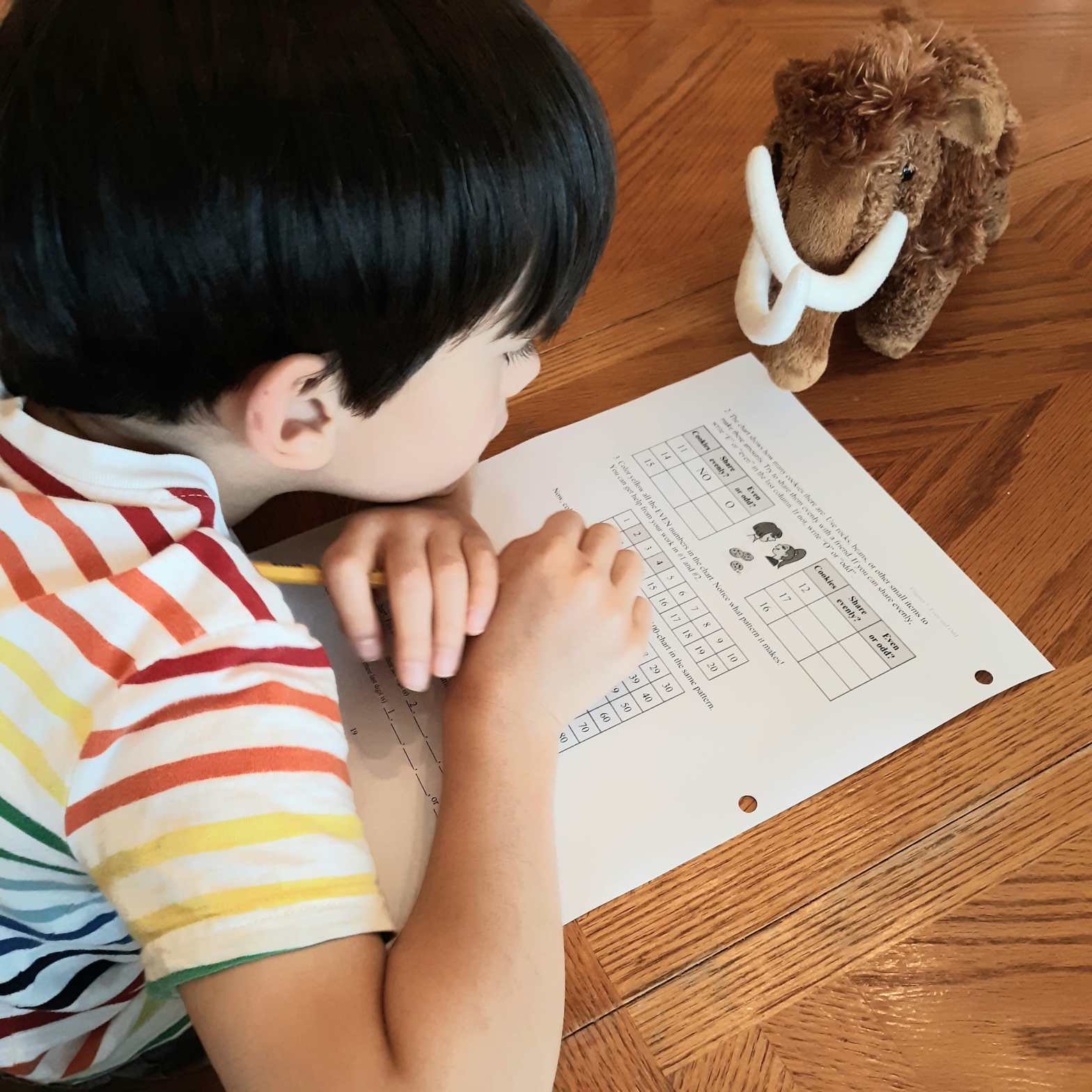
This year is our third year homeschooling my eldest son, and our first year (that I am going to count) homeschooling my daughter. We’re using a couple of tried-and-true picks, as well as some new curricula I am trying out! All curricula are secular, because that is how we roll. If you want know know what we’re doing, settle in and grab some tea, because this one’s gonna be long.

Build Your Library (BYL), Levels 0 (Around the World) and 2 (The Medieval World)
We started our homeschool journey two years ago with Level 0 with my son. BYL is really more of a book list and a schedule, with suggested activities and copywork, mapwork, etc. It’s not fancy or colorful; it’s just useful. Taking some planning off my plate for the year is worth the cost (around $40), but if you have the chance to wait for a sale, they happen a few times a year. If you are looking at secular options and your kids like learning through reading, I highly, highly recommend you check out this curriculum. Bonus, BYL levels go all the way through high school currently, unlike some other secular options that only currently go to late elementary.
When we made the decision not to enroll my daughter in 4-year-old preschool this year as planned (thanks, COVID), I decided to go through Level 0 again with her. It really only takes a 15-30 minutes most days, and my son is getting a refresher on world geography with the “around the world” theme! Then we usually accomplish most BYL Level 2 stuff in about an hour, maybe 90 minutes on a heavy reading day.
I really like BYL’s book choices and the author is constantly updating book lists and levels, particularly adding more inculsive titles. There have only been 1 or 2 books in the last two years that I didn’t really care for. My son liked them all. Also important to me for budgetary and philosophical reasons, most of the books for BYL are easy to find used, or at the library, or online at Internet Archive.
I do tweak BYL a bit. Over the past two years, I have discovered that my son does not enjoy trying to memorize poetry, so we skip that. I also sometimes skip the art projects or substitute my own. We are also using a different history spine, which I will talk about below. And sometimes, we substitute or add in books to get different perspectives. The best example of this is in Level 0, when we read Little House in the Big Woods, which can be quite problematic, much as my kids enjoy it. Last time, we also read Birchbark House, and I plan to do that again.
Curiosity Chronicles, Medieval History
Build Your Library uses Story of the World in the younger grades as its history spine. Last year we also used Curiosity Chonicles as a supplemental history because Story of the World is, in my opinion, extremely eurocentric and has a very Christian worldview. I purchased just the audiobook to give it a try, and my son loved it. We just listened to a chapter when it fit in with the Story of the World chapter.
This year, I purchased the entire printed package Curiosity Chronicles offers for their medieval history: hard copy book, audiobook, instructor’s manual, student workbook, lapbook files and timeline. After the first two weeks, I am quite impressed with the instructor’s manual and student workbook, though we don’t do every page. I have found a few typos in the written book, but the content is solid with great images. My kids really enjoy the dialogue format, and I am not finding it difficult to read aloud, which seems to be a common complaint.
We are still supplementing with Story of the World, inserting chapters as I see fit that match roughly with the time period and location of the Curiosity Chronicles chapters. But I am definitely seeing it as optional. I was worried this might throw off the activities and other readings in BYL, but when I worked it out, it still matched up quite well with only a week or two I would have to swap things out.
Building Foundations of Scientific Understanding
Though Build Your Library does include science readings and experiments, I wanted to beef it up a bit. We still do the majority of the science built in, but add in more.
Last year, we used R.E.A.L Science Odyssey Life Science. I felt it was good, but not fantastic. It covered a lot, but it had a strange timline that made it impossible to follow the lessons in order. For instance, we were instructed to raise and release butterflies in February, which is simply not possible in Iowa. The biggest bonus of using it was that I could just open and go, with next to no prep. I am terrible at the prep.
This year I am trying out Building Foundations of Scientific Understanding (BFSU), which is supposedly the most solid science for young kids, but is suuuuuupppperrr involved for the parent. I personally know only one homeschooler who has tried it, and for various reasons, mostly including time investment, she didn’t get through it. To make it more user friendly, there’s an accompanying book that lays out the lesson plans and helps figure out the order and prep. I 100% bought this and am using it. So far, so good.
Logic of English Foundations
Build Your Library does not have a component to teach reading or phonics. It does include copywork for levels 1 and above, but I wanted something a little more structured.
Hands down, Logic of English (LOE) is *the best* and I love it. I know lots of homeschoolers use Teach Your Child to Read in 100 Easy Lessons. Apparently there’s another one that’s 20 lessons. But Logic of English isn’t just learning to read. It is handwriting (cursive or script), spelling, phonics, comprehension – the whole shebang.
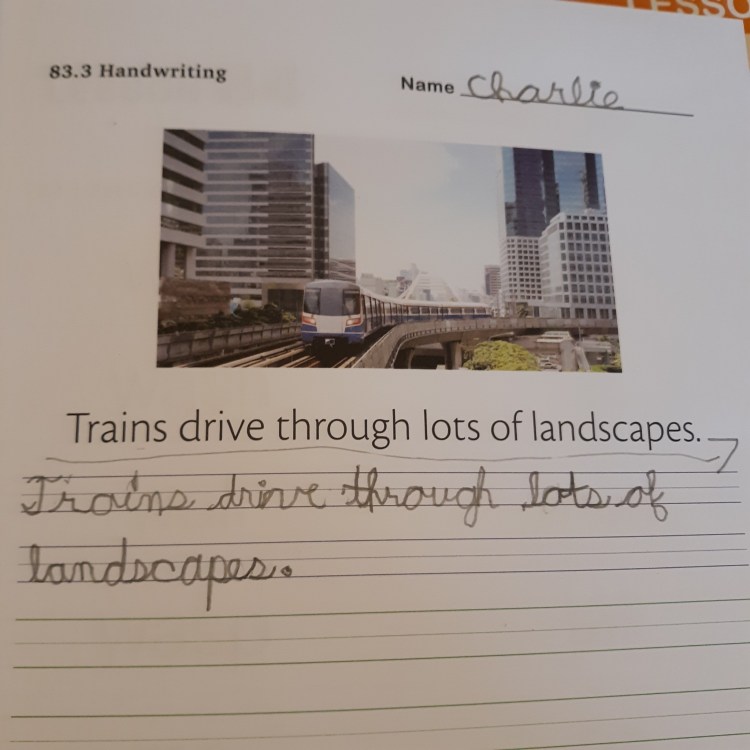
My son went to 4-year-old preK and 3 months of kindergarten before we began homeschooling, so he was already reading CVC words. I probably could have started him on one of the higher levels of LOE, but I also wanted him to learn cursive, so we started at the beginning. We sped through the first two books, but have slowed down since entering the third book. My daughter is about a halfway through the first book and is doing really well. She had no prior knowledge of reading or writing from anywhere and I am impressed with how well she does!
Math Mammoth
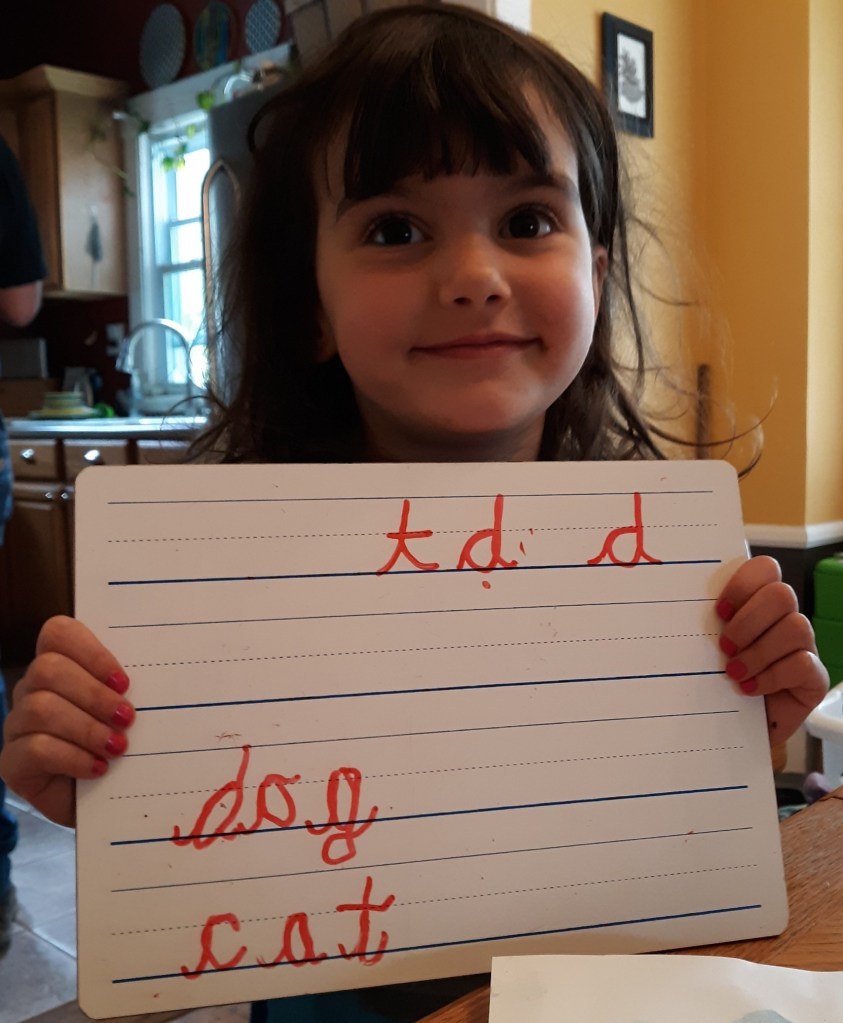
Build Your Library does not include math, so this is one area where we are not tweaking or adding to the base curriculum. Originally, I chose Shiller Math for my son. It’s a spiral program, rather than mastery, and (I would say) loosely Montessori-based. I mostly chose it because because my son HATED worksheets, and with Shiller there is very little worksheet work, mostly manipulatives and doing things orally. This lead to its downfall in our homeschool – he didn’t get a lot of practice writing numbers and equations. If I wanted him to get more practice, I had to go search it out or create it myself. Please see above, where I talk about how I am terrible at prep. However, I did like Shiller through the first two books, and my daughter is about a third of the way through the first book and doing well in math concepts.
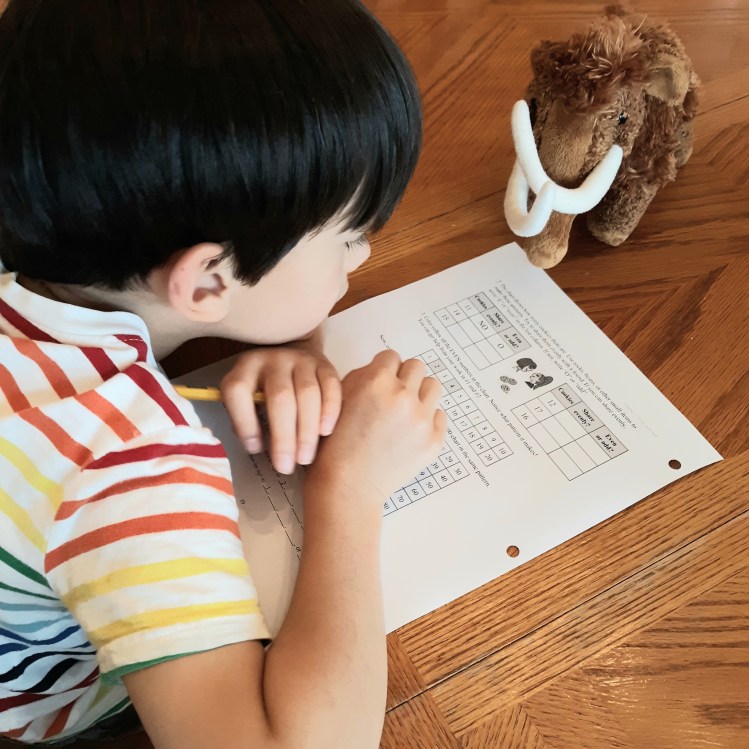
This year for my son, we are trying out Math Mammoth. Like BYL, it is not flashy or glossy. But I think that the content and presentation are super. My son was immediately obsessed with Mathy the Math Mammoth, and as an incentive I ordered him one to cheer him on as he does his math. It is still not is favorite subject, but he seems to be adjusting to the new curriculum well. We follow the author’s recommendation to assign only about half of the problems at first, and do more where it seems needed. I think my son feels like he’s getting away with something when I tell him he doesn’t have to do the entire page!
That’s it!
That’s everything I plan on using this year. If you have a question about any of these curiccula or our expereince with them, let me know in the comments!
 The Erstwhile Librarian